
Introduction
As online marketplaces continue to grow, more businesses are selling products and services through digital platforms. A reliable payment gateway can increase conversions, strengthen customer trust, and create a smoother checkout experience.
However, payment integration errors can expose customer data, interrupt transactions, and cause financial losses. This makes the selection, implementation, testing, and ongoing management of a payment gateway a critical part of every e-commerce platform.
1. Choose the Right Payment Gateway Provider
There are many payment gateway providers worldwide, so businesses should select a provider that fits their target market, technical requirements, budget, and customer preferences.
Popular providers include Stripe, PayPal, Razorpay, PayU, CCAvenue, Authorize.net, and Braintree. Other regional providers may also be suitable, especially when local currencies and payment methods are important.
Key selection factors
2. Prioritise Security During Integration
Customers are increasingly cautious about sharing payment information online. Businesses must select a secure payment provider and ensure there are no weaknesses in the implementation.
Important security measures include:
PCI DSS compliance • Tokenisation • Encryption • SSL/TLS • Web Application Firewall • Fraud prevention tools
Businesses should avoid storing sensitive card details whenever possible. Tokenisation can replace payment data with secure tokens, while encryption protects information during transmission.
Additional protections such as 3D Secure and Address Verification System checks can help identify suspicious transactions and reduce fraud.
3. Offer Flexible Payment Options
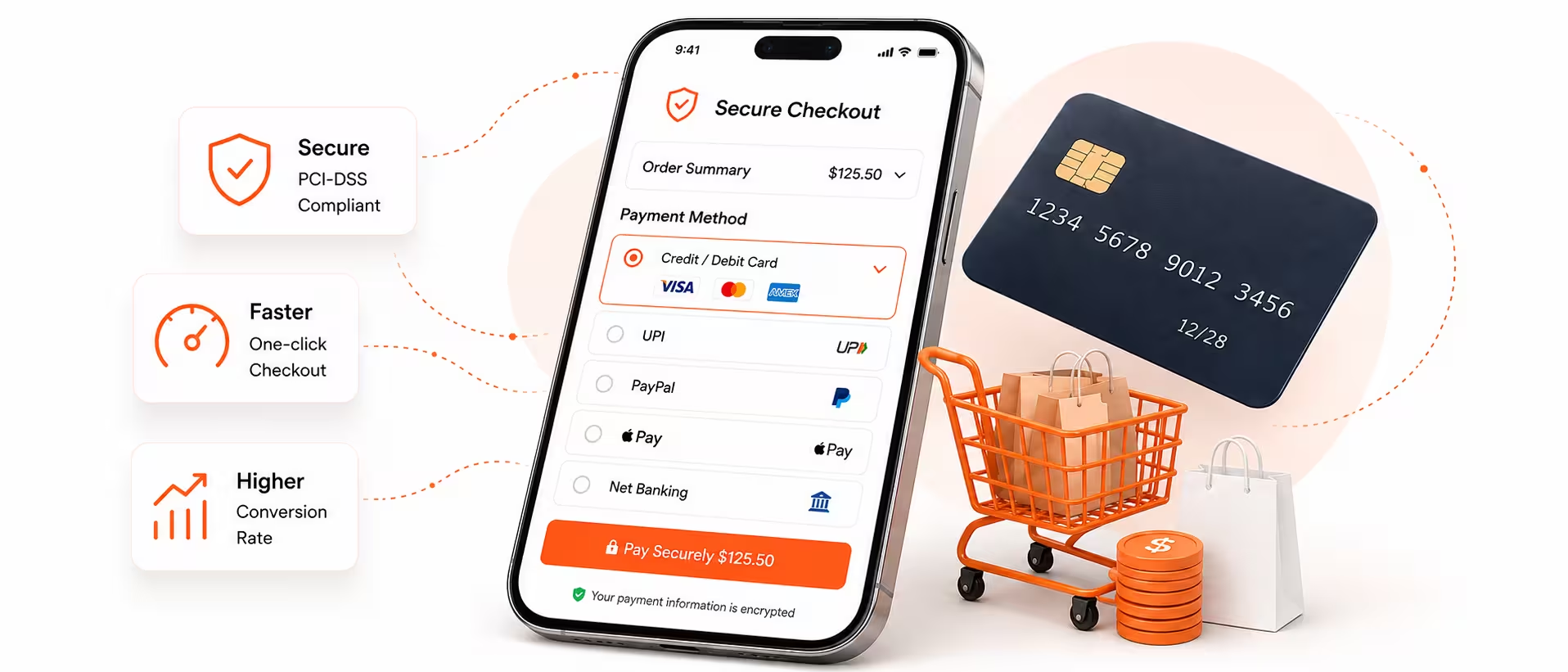
Customers are more likely to complete a purchase when their preferred payment method is available. An e-commerce platform should support a suitable mix of global and local payment options.
| Payment category | Examples | Customer benefit |
|---|---|---|
| Credit and debit cards | Visa, Mastercard, American Express | Widely recognised and convenient |
| Digital wallets | Apple Pay, Google Pay, PhonePe | Faster mobile checkout |
| Buy Now, Pay Later | Klarna, Afterpay, Affirm | Flexible payment schedules |
| Local methods | UPI and regional bank options | Familiar payment experience |
The best combination depends on the customer base, average order value, supported countries, and type of products or services sold.
4. Design a Smooth Checkout Experience
A good user experience is essential because customers may abandon a purchase when checkout feels confusing, slow, or unsafe.
When selecting and integrating a payment gateway, consider the following:
A faster and clearer checkout can reduce friction and improve conversion performance.
5. Configure Reliable Error Handling
Payment failures are unavoidable, but the way an e-commerce platform responds can determine whether the customer retries or leaves.
A reliable error-handling strategy should include friendly error messages, detailed transaction logging, safe retry policies, duplicate-payment protection, and properly configured webhooks.
Webhook events should be verified and processed safely so that order status, payment confirmation, refunds, and failed transactions remain synchronised with the payment provider.
6. Test Before Going Live
Every payment flow should be tested thoroughly before production launch. Testing should cover successful payments as well as failures, cancellations, refunds, retries, and interrupted transactions.
| Testing type | What to verify |
|---|---|
| Staging and sandbox testing | Complete checkout flows without processing real payments |
| Unit and integration testing | Payment services, APIs, webhooks, and order status updates |
| End-to-end testing | Full customer journey using provider test cards and scenarios |
| Mobile testing | Responsive checkout, wallet payments, and browser compatibility |
| Security testing | Authentication, input handling, access controls, and data protection |
7. Meet Legal and Compliance Requirements
Businesses must follow the laws and payment regulations that apply in every market where they operate.
Common requirements include PCI DSS compliance for card payments, GDPR obligations for businesses handling personal data in Europe, privacy and consent requirements, tax rules, refund policies, and other local financial regulations.
Legal and compliance requirements can vary by country, industry, provider, and business model, so they should be reviewed before launch.
Conclusion
A payment gateway is one of the most important components of an e-commerce platform. The right solution must be secure, reliable, easy to use, compatible with local payment methods, and properly tested.
RIGIC Global Solutions has extensive experience helping businesses select, integrate, test, and maintain payment gateway solutions for custom e-commerce platforms.
Contact RIGIC Global Solutions to discuss payment gateway integration for your online store or custom e-commerce software.