
A Practical Stack for Growing Products
Users do not care which framework is behind a product. They care that login works, forms do not freeze, dashboards open quickly, and the same flow feels comfortable on a phone as well as a laptop.
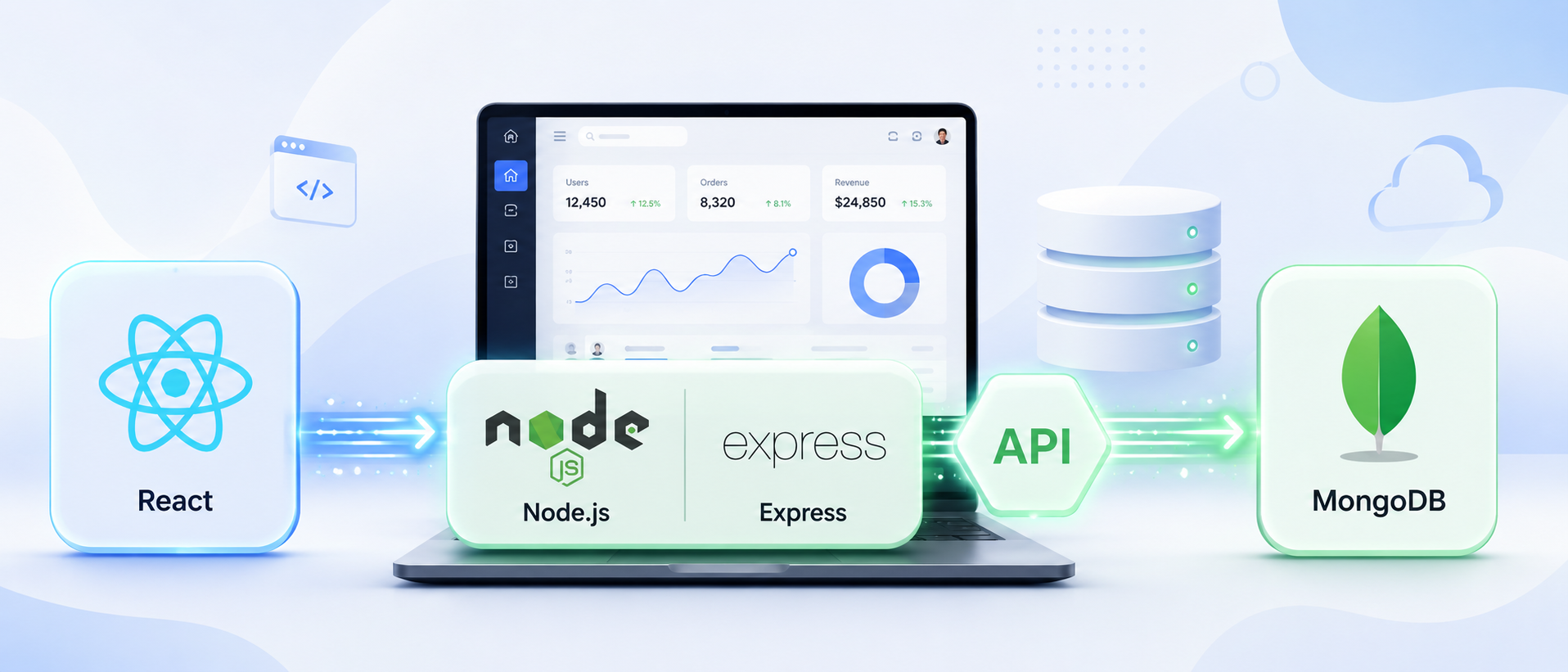
That is where MERN is useful. React takes care of the screen, Node.js and Express handle requests, and MongoDB keeps the data flexible. Because JavaScript runs through the stack, teams can move with fewer handoff gaps and a cleaner development rhythm.
React Makes the Frontend Easier to Shape
React is the visible layer of a MERN project. It shapes the pages, forms, filters, cards, tables, popups, and dashboard blocks that people use every day.
The real benefit is its component style. A button, form field, pricing card, or report tile can be built once and reused where it fits. That saves time, keeps the interface consistent, and makes design changes less painful when the product grows.
Node.js and Express Handle the Work Behind the Screen
Node.js runs the server-side part of the application. It handles the work that starts after a user clicks something: checking login, reading permissions, sending API responses, managing uploads, calling outside services, or preparing notifications.
Express gives that backend a clear route structure. A request from React reaches an Express endpoint, gets checked, follows the business rule, talks to MongoDB if needed, and then returns a useful response to the user interface.
MongoDB Keeps Data Flexible
MongoDB stores records as documents, so it suits products where the data can vary from one item to another. Profiles, catalog details, content blocks, activity logs, chat records, and custom settings are common examples.
This flexibility is helpful during product growth because new fields can be added without a heavy restructure. It still needs discipline: collections should be named clearly, indexes should support real searches, and data rules should be agreed before the database becomes messy.
Why Businesses Often Choose MERN
MERN works well when a business wants to launch a useful first version and keep room for later modules. A portal can start with core screens and later add reports, admin controls, notifications, payment flows, or mobile app APIs.
It is a good fit for SaaS products, booking tools, internal dashboards, customer portals, and e-commerce interfaces. The shared JavaScript base also makes collaboration smoother, especially for teams that handle both frontend and backend work.
The Stack Is Only as Good as the Planning
MERN can speed up development, but it should not be treated as a shortcut. Login security, role-based access, API checks, password hashing, protected environment keys, and database access rules need to be part of the first build.
Performance also depends on everyday engineering choices. Smaller API responses, tidy React components, MongoDB indexes, caching, background tasks, and monitoring are what keep the product steady once real users start using it.
Key points to keep in mind:
- ✓ React keeps the interface reusable and consistent
- ✓ Node.js handles server-side logic and integrations
- ✓ Express gives APIs a cleaner structure
- ✓ MongoDB supports changing data needs
- ✓ JavaScript connects both sides of the app
- ✓ Strong planning keeps the product reliable
Summary
MERN brings React, Node.js, Express, and MongoDB into one practical setup. React shapes the interface, Node.js and Express run the backend flow, and MongoDB stores flexible application records.
For a business, it is a sensible option when the product needs interactive screens, API-driven features, flexible data, and future expansion. It is not the right answer for every project, but when the use case fits, it keeps the stack clean without making the product harder than necessary.
Our team can help shape the frontend, backend, database, API structure, security flow, and deployment plan for a dependable MERN application.